
Should Data Centers Go Underground? Follow the Impacts Above Ground
Should Data Centers Go Underground? Follow the Impacts Above Ground
PressContact Blog · 13 minute read
"As soon as the center went in they started using their blowers," Tracy Bell [told KSL in July](https://www.ksl.com/article/51595305/some-data-center-companies-are-working-to-be-good-neighbors-but-is-it-enough). Bell lives near an Aligned data center in West Jordan, UT. "They're really loud. (It's) about the sound of about 10 lawn mowers out going in the neighborhood at the same time." A KSL meter read 70 decibels about a block from the site.
Aligned told KSL the exhausts come from backup generators that sit mostly idle outside of compliance testing, grid emergencies and planned utility outages. That equipment is part of a data center that stays at the surface, wherever the servers go.
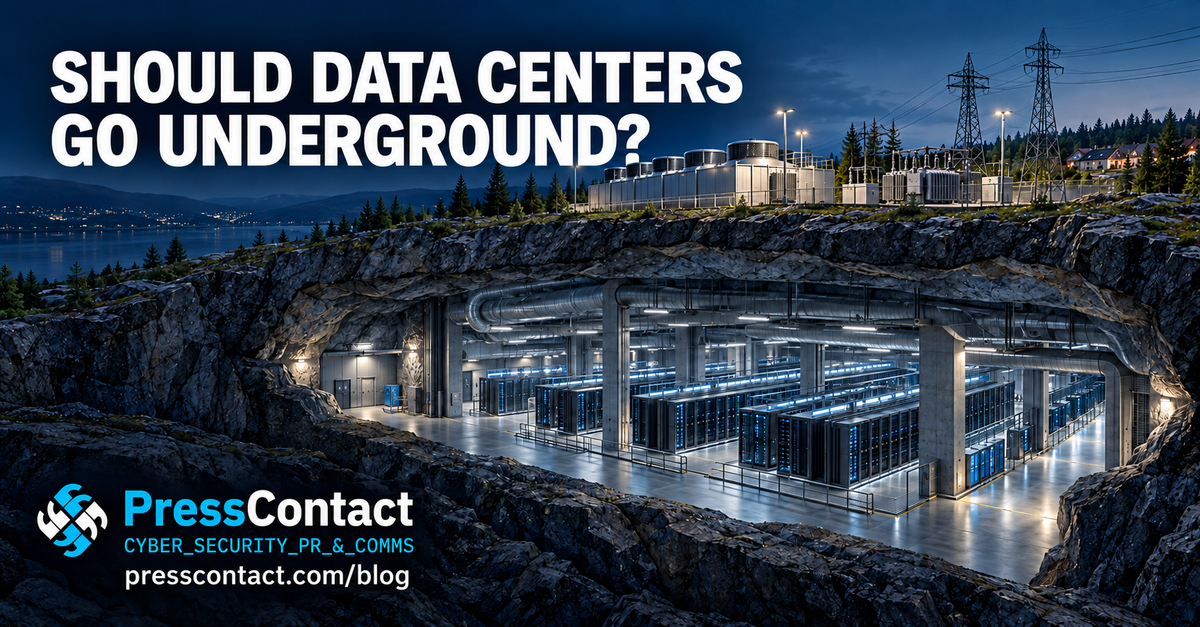
Moving the servers underground changes some of what neighbors object to. It does not by itself move the substation, the generators, the cooling plant, or the power lines. To judge an underground proposal, follow the impacts that stay above ground.
Bell is not alone. Heatmap Pro's poll of 4,118 registered voters, fielded May 15 to 28, 2026, found [more than half hold data centers largely responsible for rising electricity prices, and a majority now support a nationwide halt to new construction](https://heatmap.news/plus/the-fight/spotlight/data-center-moratorium-poll). Data Center Watch counted [at least 45 U.S. projects worth about \$68 billion disrupted by local opposition between April and June 2026](https://www.datacenterwatch.org/q2-2026).
A data center is more than its server halls. It is cooling equipment, an electrical yard, backup generators, water systems, and a construction project. This piece takes each one in turn: what changes when the servers go underground, what stays a community concern, and what evidence a developer should be able to show.
Who Is Already Underground
Underground data centers are not new. Almost all of them reuse holes someone else dug: limestone mines, Cold War bunkers, and old military sites.
| Site | Location | What it was | Notes |
| :---- | :---- | :---- | :---- |
| [Iron Mountain National Underground](https://www.datacenterknowledge.com/business/iron-mountain-is-taking-the-data-center-underground) | Boyers, PA | Limestone mine | 145-acre facility, 220 feet down |
| [SubTropolis Technology Center](https://www.datacenterknowledge.com/data-center-site-selection/bunkers-mines-and-caverns-the-world-of-underground-data-centers) | Kansas City, MO | Limestone mine | Hunt Midwest complex, LightEdge tenant |
| [Lefdal Mine Datacenter](https://datacenternews.asia/story/new-data-centre-built-ex-mine-pushing-be-europes-greenest) | Maloy, Norway | Olivine mine | 150 meters into a mountain, open since May 2017 |
| [Bahnhof Pionen](https://www.datacenterknowledge.com/data-center-site-selection/bunkers-mines-and-caverns-the-world-of-underground-data-centers) | Stockholm, Sweden | Civil defense bunker | Cold War era |
| [Trentino DataMine](https://www.ecoticias.com/en/an-active-mine-in-the-italian-alps-becomes-a-58-million-underground-data-center-pairing-servers-with-apples-and-wine-in-a-cooling-bet-built-where-ore-once-came-out/32646/) | Trentino, Italy | Active quarry | 800 kW to start, more than \$58 million |
The newest money is AI money. In Sardinia, Italy, Italy's government declared Energy Vault's Digital Vault Sulcis project at the former Nuraxi Figus coal mine a matter of national strategic interest. The [filing describes about EUR 1.49 billion and a data center of up to 30 MW](https://www.unionesarda.it/en/sardinia/government-approves-15-billion-for-the-ai-data-center-in-the-former-nuraxi-figus-mine-nrsxeqbv). Earlier Energy Vault material said up to 100 MW. Public reporting does not make clear how much of it sits in the shafts versus on the surface of the mine site.
These are still a sliver of the market. Nearly all new AI capacity is still being built above ground.
The Facility, Component by Component
The server halls are the easiest part to put underground. Most of the parts neighbors complain about can still end up at the surface.
| Component | What underground siting can change | What can stay a community concern | Evidence to ask for |
| :---- | :---- | :---- | :---- |
| Server halls | No new building on open land, little visible footprint | Portal, access roads, security perimeter | Site plan showing every surface structure |
| Cooling equipment | Fans and chillers inside rock are hard to hear | Heat still has to leave the site, through water or surface heat rejection | Cooling design, and an acoustic study at the property line |
| Electrical infrastructure | A better cooling design can lower total facility demand | IT load, substation, transmission lines, rate impact | Peak demand in MW, PUE target, utility interconnection filing |
| Generators and on-site power | Little, since exhaust still vents to open air | Diesel testing, on-site gas turbines | Generator count, testing schedule, air permit |
| Water systems | Near-zero fresh water where seawater or another cold source feeds the cooling loop | Water at upstream power plants, groundwater in mines | Annual fresh water use in gallons, and its source |
| Construction | Reusing a mine avoids a new building shell | New excavation, truck traffic | Construction plan, and spoil volume for any new cavern |
Server Halls and Land
This is where underground siting delivers most directly. An existing mine puts the halls out of sight, off open land, and behind rock. That is a real answer to residents whose objection is the size of a new building or the loss of farmland or green space.
What stays visible is everything that connects the halls to the outside: the portal, access roads, fencing, and fiber routes. A site plan that shows every surface structure is the fair test of how small the footprint really is.
Cooling Equipment: Separate the Location From the Technology
Underground location and cooling technology are two separate decisions. The best-known efficiency numbers come from the second, not the first.
Lefdal Mine Datacenter in Norway is the usual example. It pulls [8 degree Celsius seawater from the fjord through heat exchangers that cool a closed fresh water circuit from 30 to 18 degrees](https://theenergyst.com/?p=14451). For air-cooled halls, [inline cooling turns that cold fjord water into cold air](https://www.datacenterdynamics.com/en/analysis/data-mining-lefdal-mine-datacenter/). The mountain gives stable temperature and physical protection. The fjord, not the depth, is what makes the seawater design possible. A mine in Kansas or Pennsylvania has the stable rock but no fjord.
Noise follows the same split. Complaints at surface sites point at [chillers, cooling towers, condenser fans and diesel generators](https://www.wkow.com/news/lawsuit-targets-microsoft-data-center-in-mount-pleasant-over-noise-complaints/article_f7de85db-b204-43f8-afc8-55eea87bdda0.html), as listed in a proposed class action against Microsoft's Fairwater campus in Mount Pleasant, WI. Microsoft says it fixed the cause, and [the village reported no formal complaints after its April 2026 adjustments](https://www.all-about-industries.com/cooling-in-the-data-center-cool-for-ai-loud-for-the-neighbors-a-d15bc113449c9b892b5e50d13810e5cb/). What residents describe is usually the [24-hour hum, not peak volume](https://www.eesi.org/articles/view/communities-are-raising-noise-pollution-concernsabout-data-centers).
Rock blocks that hum well when the fans and chillers sit inside it. But the heat has to leave the site. It goes into a water body, as at Lefdal, or up to vents and heat rejection equipment at the surface. Ask where every piece of cooling equipment sits, and ask for an acoustic study at the property line.
Electrical Infrastructure and Grid Demand
A better cooling design can lower a site's total power demand. It does not remove the electricity the servers themselves need.
Cooling is a large share of a typical data center's use, [about 40% of electricity on average](https://www.eesi.org/articles/view/communities-are-raising-noise-pollution-concernsabout-data-centers) by one estimate. Power usage effectiveness (PUE) is total facility power divided by IT power. Lefdal reports a [design PUE of 1.08 to 1.15](https://datacenternews.asia/story/new-data-centre-built-ex-mine-pushing-be-europes-greenest), a figure tied to its seawater system.
An illustration of what that range means: 100 MW of servers at a PUE of 1.5 draws about 150 MW from the grid. At 1.1 it draws about 110 MW. That is a real reduction in substation and grid demand. The 100 MW the servers use does not change with depth, and neither do the transmission lines and generation needed to deliver it.
Power cost is a live concern. In Pew Research Center's July 20 to August 9, 2026 survey of 10,548 adults, [57% said data centers are mostly bad for home energy costs](https://www.pewresearch.org/wp-content/uploads/sites/20/2026/09/SR_26.09.22_data-centers_topline.pdf), up from 50% in January. The same survey found 56% now say data centers are mostly bad for quality of life nearby, up from 40%. Ask for peak demand in megawatts, the PUE target, and the utility interconnection filing.
Generators and On-Site Power
Backup power is the component underground siting changes least. Most sites keep banks of diesel generators for grid outages and run them for regular testing. Industrial units of that size can [reach 105 decibels](https://www.eesi.org/articles/view/communities-are-raising-noise-pollution-concernsabout-data-centers).
A generator inside a mine still needs exhaust, and that exhaust reaches open air through a shaft or stack. Burying the building moves the outlet. It does not change what the engine emits.
AI campuses increasingly bring their own gas turbines to get power faster than the grid can deliver it. Data Center Watch found that [projects building their own power supply draw extra opposition](https://datacenterwatch.org/report). A gas plant next to a mine portal is still a gas plant. Ask for the generator count, the testing schedule, and the air permit.
Water Systems
Water use depends on the cooling design and the local water source, not on depth.
The baseline is large. Lawrence Berkeley National Laboratory estimated U.S. data centers [used 17 billion gallons of water directly for cooling in 2023](https://gijn.org/stories/researching-water-consumption-data-centers/), and projects that figure could double or quadruple by 2028\. The same study put indirect use, the water consumed at the power plants feeding them, at 211 billion gallons.
Lefdal's closed fresh water loop, cooled by seawater, [eliminates fresh water consumption entirely, according to Data Centre Magazine](https://publication.datacentremagazine.com/data-centre-magazine-february-2026/0739753001769685783/p37). That result belongs to the seawater design. A limestone mine without a cold water source still needs a cooling system, and that system may use water.
Mines also bring their own water questions, since many take in groundwater that has to be managed and pumped out. Ask for annual fresh water use in gallons and where that water comes from.
Construction
Reusing an existing mine is the cheapest and fastest version of the idea. It avoids a new building shell, most grading, and much of the truck traffic of a greenfield campus.
Digging new caverns is a different project. TechTarget notes a new underground build [can cost more than an above-ground facility](https://www.techtarget.com/it-infrastructure/tip/Benefits-and-challenges-of-underground-data-centers) when no existing cavern is available, and excavation brings its own blasting, hauling and spoil. Ask whether the plan reuses existing space or digs new space, and how much rock leaves the site.
The Downsides
The biggest limit is supply. There are only so many dry, stable, empty mines near fiber and power, and digging new caverns costs more than building on the surface.
- Growth. TechTarget calls [expansion difficult and potentially dangerous](https://www.techtarget.com/it-infrastructure/tip/Benefits-and-challenges-of-underground-data-centers) unless the site was designed for it from the start.
- Layout. The rock sets the floor plan. Iron Mountain's Boyers site follows [25-foot-square support columns](https://www.techtarget.com/it-infrastructure/photostory/2240210756/Your-data-lives-where-Strange-and-secure-data-center-locations/6/How-a-data-bunker-works-in-a-former-mine). Its operations VP said many underground projects fail because teams treat them like a normal greenfield build.
- Power density. AI racks run far hotter than the 5 kW racks behind Lefdal's original PUE figures. Data Center Dynamics reports [air-cooled densities up to 50 kW per rack in one of Lefdal's 10 MW halls, direct liquid cooling options supporting 300 kW per rack, and 400 kW designs in progress](https://www.datacenterdynamics.com/en/analysis/data-mining-lefdal-mine-datacenter/). Those are rack-density figures, not measures of cooling savings. Older caverns built for storage may not reach them.
- Permits still apply. An analyst told Data Center Knowledge that [nobody will oppose a data center in a mine](https://www.datacenterknowledge.com/data-center-site-selection/bunkers-mines-and-caverns-the-world-of-underground-data-centers), but the same article notes operators still face permitting, environmental review and community engagement.
Has Anyone Asked the Public?
Yes, about data centers in general, many times in 2026\. The research reviewed for this article did not establish whether underground siting would change residents' support. General opposition polling cannot answer that question.
The independent 2026 polls below found more opposition than support for a data center nearby. The 2025 vendor survey is the exception. Question wording, samples and dates vary, so the numbers are not directly comparable.
| Poll | Field dates | Sample | Question asked about | Result |
| :---- | :---- | :---- | :---- | :---- |
| [Annenberg Public Policy Center, Penn](https://www.annenbergpublicpolicycenter.org/opposition-to-local-data-centers-rises-sharply-annenberg-survey-finds/) | Jun 16-Jul 19, 2026 | 1,320 U.S. adults | New data center in your area | 61% oppose, 14% support |
| [Marquette Law School](https://law.marquette.edu/assets/community/poll/MLSP89/MLSP89ToplinesRV.html) | Jul 8-16, 2026 | 838 Wisconsin registered voters | Costs vs. benefits of large data centers proposed or under construction in Wisconsin | 76% say costs outweigh benefits |
| [Rasmussen Reports](https://www.rasmussenreports.com/public_content/politics/trump_administration_second_term/data_centers_not_in_my_backyard_most_voters_say) | Jun 21-23, 2026 | 1,129 likely voters | Data center in your community | 52% oppose, 39% support |
| [Heatmap Pro / Embold Research](https://heatmap.news/plus/the-fight/spotlight/data-center-moratorium-poll) | May 15-28, 2026 | 4,118 registered voters | Data centers and electricity prices | More than half hold data centers largely responsible for rising prices, a majority back a nationwide halt |
| [Redfin / Ipsos](https://www.redfin.com/news/ai-data-centers-opposition-education-benefit/) | May 2026 | 4,000 U.S. residents | AI data center in your neighborhood | 53% oppose, 34% support |
| [Airedale (cooling vendor) / Pollfish](https://www.businesswire.com/news/home/20250522623557/en) | 2025 | 600 U.S. adults | Data center within a few miles | 70% comfortable |
The Airedale survey is the outlier, and it was commissioned by a company that sells data center cooling. Its own follow-up found that [only 5% saw data centers as extremely loud](https://www.airedale.com/2025/12/02/data-center-community-acceptance-report/), and that support rose when a project brought local jobs and better internet.
The closest thing to research on design choices comes from South Korea. A [nationwide study of about 1,000 people presented at EGU 2026](https://meetingorganizer.copernicus.org/EGU26/EGU26-4629.html) measured what compensation residents would accept, and tested whether waste heat reuse for district heating and shared community facilities changes acceptance. It did not test underground siting.
A survey that shows residents a specific underground design, with its surface equipment, and asks whether that changes their answer would give developers and local officials evidence they do not have now.
The Real Test: Does the Design Answer the Objection?
Underground siting is a design choice, not an answer in itself. It earns support only where it addresses a concern residents have actually raised, and where the developer can show the evidence.
For a community where the objection is a new building on open land, an existing mine is a strong answer. Where the objection is noise, the answer depends on where the cooling and heat rejection equipment sits. Where it is water, the answer depends on the cooling source. Where it is the electric bill or a gas plant, moving the servers underground does little unless the project also changes how much power it draws and where that power comes from.
Developers pitching an underground site should lead with the residents' stated concern and the evidence that the design meets it: the site plan, the acoustic study, peak demand, fresh water use, and the generator permit. Officials and residents should ask for the same documents. An underground proposal without them is a location, not a mitigation plan.
This is the **underground siting evidence checklist**: the site plan, acoustic study, peak demand, fresh water use and generator permit that let a community test the proposal.
Frequently Asked Questions
### Are Any Data Centers Built Underground?
Yes. Iron Mountain runs one 220 feet down in a former limestone mine in Boyers, Pennsylvania. Other examples include SubTropolis in Kansas City, Missouri, Lefdal Mine Datacenter in Norway, Bahnhof Pionen in Stockholm, Sweden, and Trentino DataMine in Italy. Most reuse existing mines and bunkers rather than new excavation.
### Are Underground Data Centers Quieter for Neighbors?
Only if the cooling and heat rejection equipment stays underground too. Rock blocks fan and chiller noise well. But heat still has to leave the site through water or surface vents, and backup generator exhaust still reaches open air through a shaft or stack.
### Do Underground Data Centers Use Less Electricity?
They can use less for cooling when paired with a cold water source. Lefdal in Norway reports a design PUE of 1.08 to 1.15, tied to its fjord seawater system. The servers draw the same power at any depth, so the grid still has to deliver the IT load.
### Do Underground Data Centers Use Less Water?
It depends on the cooling source, not the depth. Lefdal's seawater-cooled loop uses no fresh water, according to Data Centre Magazine. A mine without a cold water source still needs a cooling system, and that system may use water.
### Has Anyone Polled Whether People Support Underground Data Centers?
Not in the research reviewed for this article. 2026 polls on data centers in general found majority opposition, including 61% opposed in Annenberg Public Policy Center's June to July survey of 1,320 U.S. adults. None tested underground siting.
**By Alan Wallace.** Alan Wallace is a PR and communications professional focused on cybersecurity, technology and data center communications. Follow [PressContact on X](https://x.com/presscontactllc).